
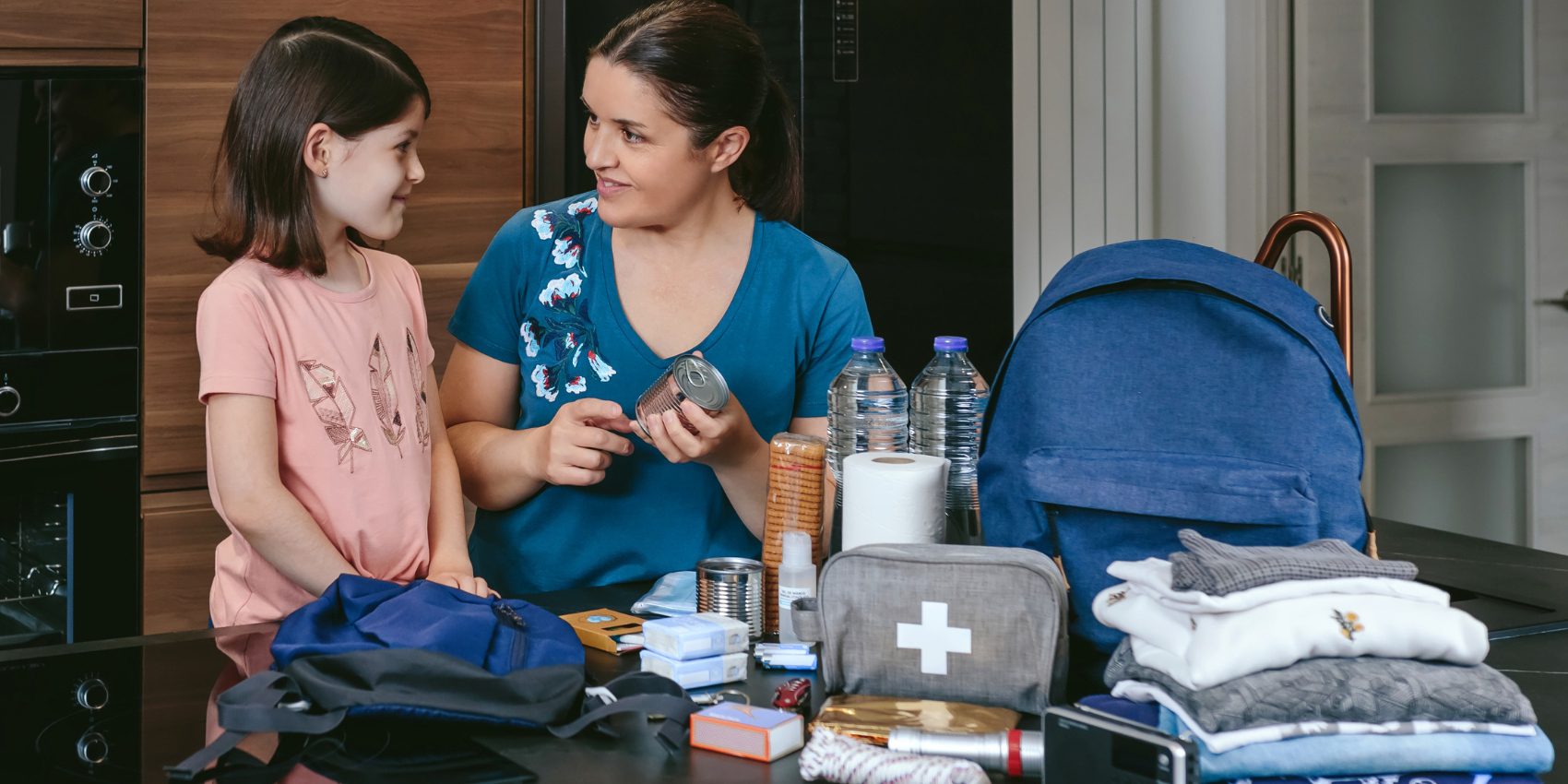
Could Your Family Go 72 Hours Without Leaving Home?
The power is out. Roads are closed. Stores may not be open, and local officials have advised residents to stay home. Could your family manage comfortably and safely for the next 72 hours?
A hurricane, blizzard, wildfire, flood or other emergency could make travel difficult or dangerous. In some situations, authorities may specifically ask you to shelter in place to stay away from hazards and keep roads clear for emergency responders.
Fortunately, preparing for a few days at home doesn’t require an elaborate emergency stockpile. Start with the basics: food, water, medications, power, communication and a plan for everyone in your household, including your pets. Use this practical checklist to see how prepared your household is and what you may still need.
Identify a Safe Area in Your Home
Depending on the emergency, staying safe may mean more than simply staying inside. Severe weather, for example, may require moving to a more protected area of your home.
Look at your home now, before you need to make that decision quickly. An interior room away from windows, such as a bathroom, closet or hallway, may provide better protection during severe weather. A basement can also be appropriate for some weather emergencies, although flooding risks and official emergency guidance should always be considered.
☐ Flashlights for different areas of the home
☐ Battery-powered or rechargeable lanterns
☐ Extra batteries
☐ Fully charged portable power banks
☐ Solar charger, if available
☐ Extra blankets and warm clothing for cold weather
Remember, the safest location can vary depending on the emergency. Always follow instructions from local emergency officials.
Prepare for a Power Outage
Losing electricity can affect much more than your lights. During an extended outage, you may not be able to cook, heat or cool your home, charge devices or easily receive important information.
Check your supplies:
☐ Flashlights for different areas of the home
☐ Battery-powered or rechargeable lanterns
☐ Extra batteries
☐ Fully charged portable power banks
☐ Solar charger, if available
☐ Extra blankets and warm clothing for cold weather
Avoid relying on candles for emergency lighting because of the fire risk.
If you own a portable generator, learn how to use it safely before you need it. Generators should always be operated outdoors and well away from the home, doors and windows — never in a house, basement, garage or other enclosed space. Follow the manufacturer’s instructions for operation, fueling and storage.
During periods of extreme heat or cold, your home may eventually become unsafe without heating or air conditioning. Follow local emergency guidance about warming or cooling centers and whether it is necessary to leave.
Keep Your Phone Working
Your phone may become one of your most important tools during an emergency, providing weather alerts, emergency instructions and a way to communicate with family. When power is limited, make that battery last.
☐ Lower screen brightness.
☐ Close apps you aren’t using.
☐ Turn off Wi-Fi, Bluetooth and location services when they aren’t needed.
☐ Use airplane mode when you only need information already stored on your phone.
☐ Keep portable chargers fully charged.
If necessary, a vehicle can be used to recharge a phone, but the vehicle should only be operated outdoors — never inside a garage or other enclosed space where carbon monoxide can accumulate.
Quick tip: Don’t wait for a storm warning to discover your portable charger is dead. Make charging backup batteries part of your regular emergency routine.
Stock Three Days of Food
You don’t need special survival meals. Familiar foods your family already enjoys may be a better choice. Look for items that require little or no refrigeration, cooking or water to prepare.
Build your emergency pantry:
☐ Canned tuna or chicken
☐ Beans and ready-to-eat soups
☐ Peanut butter and crackers
☐ Cereal or granola
☐ Energy bars
☐ Dried fruit and nuts
☐ Other shelf-stable family favorites
☐ Manual can opener
☐ Disposable plates, cups, napkins and utensils
Periodically check expiration dates and rotate emergency foods into your regular meals so nothing goes to waste.
Store Enough Water
Water should be one of your top emergency-preparedness priorities. A common planning guideline is at least one gallon of water per person per day for several days, with additional water for pets, medical needs or hot weather. That means a family of four would need at least 12 gallons of water for three days just for the people in the household.
☐ Calculate one gallon per person per day.
☐ Include additional water for pets.
☐ Consider whether anyone has medical needs that require additional water.
☐ Store water somewhere accessible.
☐ Periodically check your supply.
Prepare Medications and Health Supplies
A first-aid kit is important, but think beyond bandages and antiseptic wipes. What does each person in your household need to remain healthy and comfortable for several days?
Review your health supplies:
☐ First-aid kit
☐ Pain relievers and other commonly used over-the-counter medications
☐ Prescription medications
☐ Glasses or contact lens supplies
☐ Hearing-aid batteries
☐ Medical-device supplies
☐ Diapers and other personal-care products
☐ Other health items specific to your household
Most importantly, don’t wait until an emergency is approaching to realize someone is running low on an essential prescription. When possible, keep medications refilled on schedule and talk with your healthcare provider or pharmacist about appropriate emergency planning for medications you rely on.
Have More Than One Way to Get Information
Conditions can change quickly during an emergency. Roads may close. Evacuation or shelter instructions can change. Officials may issue new safety recommendations. Your cellphone can be an important source of information, but it shouldn’t be your only one.
☐ Make sure emergency alerts are enabled on your phone.
☐ Have a battery-powered or hand-crank radio available.
☐ Know which local emergency management agencies to follow.
☐ Have a way to access local news and NOAA Weather Radio.
Be cautious about information shared on social media during an emergency. Rumors can spread quickly. Look to local emergency management agencies, police and fire departments, government agencies and other verified sources for instructions.
Create a Family Communication Plan
What happens if everyone isn’t together when the emergency begins? Decide now how you’ll reconnect and communicate.
☐ Choose an out-of-area relative or friend as a family contact.
☐ Make sure everyone knows that person’s phone number.
☐ Write important numbers down rather than storing them only in your phone.
☐ Establish predetermined check-in times.
☐ Talk about where family members should meet if you become separated.
Predetermined check-ins can reduce repeated calls and texts when cellphone service or battery power is limited. Think beyond your immediate household, too. Check on nearby relatives, friends and neighbors, particularly older adults or anyone who may need assistance during an extended emergency.
Prepare for Your Pets
If your pets are part of your family, they’re part of your emergency plan.
Here’s a quick pet checklist:
☐ Several days of food
☐ Water
☐ Medications
☐ Food and water bowls
☐ Leashes or harnesses
☐ Carriers
☐ Waste bags or litter
☐ Current identification tags
☐ Updated microchip information
☐ Copies of vaccination and veterinary records
Plan for Life Without Wi-Fi
Once everyone is safe and accounted for, you may face another challenge: keeping the household occupied during a long outage. A few low-tech options can make the time easier, especially for families with children.
☐ Books
☐ Playing cards
☐ Puzzles
☐ Board games
☐ Coloring supplies
☐ Toys
☐ Paper and pencils
You may even discover that an old-fashioned family game night makes the hours pass surprisingly quickly.
Your 72-Hour Emergency Checklist
You don’t have to prepare for everything at once. Start by walking through your home and asking one simple question: What would we need if we couldn’t leave for three days? Then use this master checklist to see where you stand:
☐ Safe area identified
☐ Flashlights and lanterns working
☐ Extra batteries available
☐ Portable power banks charged
☐ Three-day food supply
☐ Three-day water supply
☐ Manual can opener
☐ First-aid supplies
☐ Prescription medications
☐ Personal and medical necessities
☐ Battery-powered or hand-crank radio
☐ Family emergency contact identified
☐ Important phone numbers written down
☐ Pet food, water and supplies
☐ Important household documents accessible
☐ Books, games and other offline activities
Don’t worry if you can’t check every box today. Add a few supplies each time you shop. Charge the power banks. Find the flashlights. Talk to your family about where to go and how to communicate. And once an emergency has passed, replace any food, water, batteries, medications or other supplies you used.
Because the best time to figure out whether your family can make it through 72 hours at home is before those 72 hours begin.
Related Articles
Ready to get a quote?
Get a quote online or speak with a trusted representative by calling 1.866.680.5143.
Get a quote online or speak with a trusted representative by calling 1.866.680.5143.