
Pothole Season Survival Guide
Welcome to pothole season, where every drive can feel like an obstacle course. But before you resign yourself to white-knuckle commutes and costly repairs, take heart. This survival guide will help you navigate the bumps, protect your car, and stay one step ahead of the damage.
Why Do Potholes Form?
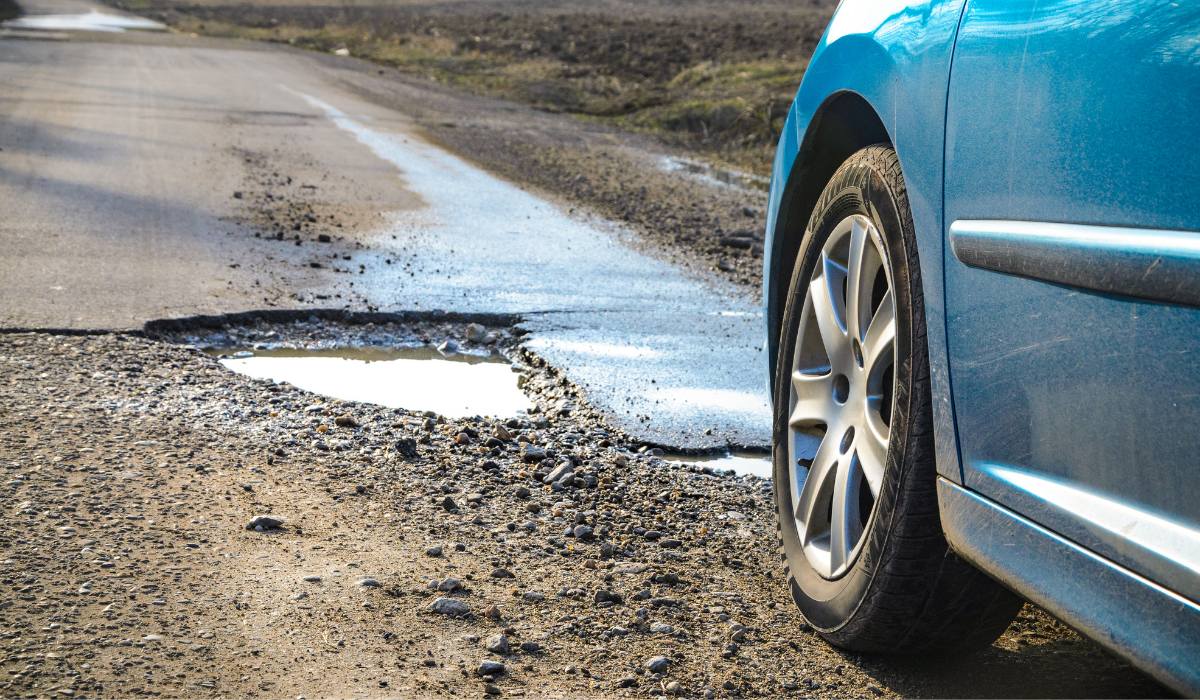
Potholes don’t just appear overnight – they’re the result of a slow breakdown beneath the surface. It all starts when water seeps into small cracks in the road. When temperatures drop, that water freezes and expands, putting pressure on the pavement and weakening it from within.
As the weather warms up, the ice melts, leaving behind empty spaces under the surface. Add in the constant stress of passing cars and trucks, and that weakened pavement begins to crumble. Pieces break loose, and before long, a pothole forms – and keeps getting bigger as more debris is kicked out by traffic.
This is why potholes seem to pop up everywhere in the spring. The repeated freeze-thaw cycle, combined with melting ice and heavy traffic, creates the perfect conditions for roads to start falling apart. Poor drainage and aging pavement only make the problem worse.
What Potholes Can Do to Your Car
A pothole may seem like just a nuisance, but it can do some real damage to your car.
- Steering and Suspension: A hard hit can throw off alignment and strain the components that keep your ride smooth and responsive.
- Undercarriage: What you don’t see underneath can take a direct hit, leading to hidden damage that worsens over time.
- Tires and Wheels: Sharp edges can puncture tires or bend rims in an instant, turning a bump into a breakdown.
- Body and Exhaust System: Low clearance plus deep potholes can mean scrapes, dents, or damage to vital exhaust parts.
- Loss of Control: A sudden jolt can momentarily compromise your grip on the road, especially at higher speeds or in traffic.
How to Avoid Damage
Potholes may be unavoidable at times, but a few smart habits can go a long way in protecting your car – and your wallet.
Keep your tires properly inflated.
Both overinflated and underinflated tires are more vulnerable to damage when you hit a pothole, so it pays to check your tire pressure regularly.
Stay alert to the road ahead.
Potholes often show up as darker patches in the pavement – and they can form overnight, especially after heavy rain or a quick freeze-thaw cycle.
Give yourself some space.
Keeping a safe distance from the car in front of you gives you time to react. If they suddenly swerve, it’s often your first clue that trouble is ahead.
Slow down whenever you can.
Speed makes a big difference. Hitting a pothole at full speed can do serious damage, while slowing down reduces the impact. If you can safely steer around it, do so. If not, ease off the brakes just before impact and hold the wheel steady. Braking hard right on top of a pothole can actually increase the risk of damage.
Check your car after a hit.
If you do hit a pothole, don’t ignore it. Look for signs like low tire pressure, dents in your rims, bulges in the tire, vibrations, or your car pulling to one side. If anything feels off, it’s worth having a professional take a look.
Note: Unlike a small puncture from a nail, pothole damage on a tire often can’t be fixed with a quick sealant. If a tire is compromised, your safest bet is to swap it out for your spare and replace it.
Report dangerous potholes.
If you spot a particularly bad pothole, reporting it can help prevent damage to other drivers. Contact the property manager for private lots, your town for local roads, or your state’s Department of Transportation for highways.
What Insurance May (and May Not) Cover
Hitting a pothole can feel like a one-second mistake that leads to a whole lot of hassle – and your first instinct might be to call your insurance company. That’s a smart move, but whether you’re covered depends on the type of policy you have.
Here’s the key thing to know: pothole damage typically falls under collision coverage, not liability or comprehensive. Since collision is optional, not every driver carries it. And even if you do, there’s still your deductible to consider. If the cost to fix the damage is less than – or close to – your deductible, filing a claim may not make sense.
That said, insurance isn’t your only possible path to reimbursement. You might have some backup options:
- Tire warranties sometimes include protection against road hazards like potholes –worth checking if your tires are fairly new.
- Local government agencies (city, county, or state) may reimburse you if the damage happened on a road they maintain. Just be prepared: the claims process can be slow and requires solid documentation.
If you do decide to file a claim – whether through insurance or a municipality – details matter. Take clear photos of the pothole, your vehicle’s damage, and the surrounding area. Make note of the exact location, time of day, your rate of speed, and weather conditions. The more thorough your documentation, the stronger your case.
A little preparation can go a long way in turning a frustrating pothole encounter into a manageable situation. Safe travels out there!
Related Articles
Ready to get a quote?
Get a quote online or speak with a trusted representative by calling 1.866.680.5143.
Get a quote online or speak with a trusted representative by calling 1.866.680.5143.