
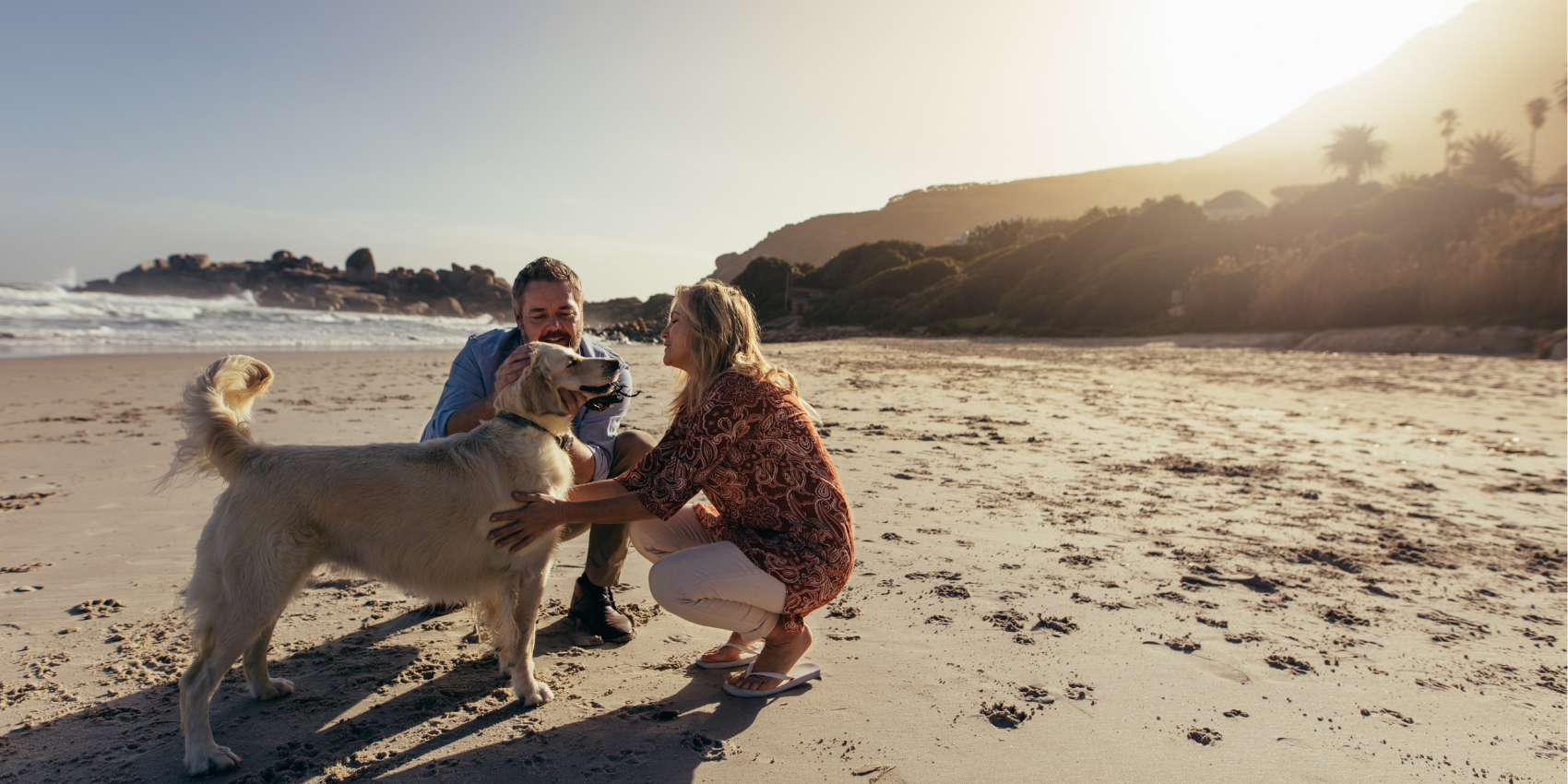
Water & Sun Safety for Dogs
If your dog’s summer bucket list includes beach trips, pool parties, boat rides, and backyard adventures, they’re not alone. Summer is a season made for wagging tails and outdoor fun, but it also brings hidden hazards that can put even the happiest pups at risk. From heatstroke and burned paws to water-related dangers and sunburn, a little preparation goes a long way toward keeping your dog safe all summer long.
Beat the Heat
Dogs are already wearing a fur coat, which means they feel the heat much more intensely than we do. Senior dogs, puppies, and flat-faced breeds* are especially vulnerable to overheating and heatstroke.
- Provide plenty of clean, fresh water at all times.
- Make sure your dog has access to shade whenever outdoors.
- Avoid strenuous exercise during the hottest part of the day.
- Never leave your dog in a parked vehicle, even for a few minutes.
- Watch for signs of overheating, including:
- Excessive panting
- Difficulty breathing
- Excessive drooling
- Weakness or collapse
- Severe heatstroke symptoms may include:
- Seizures
- Bloody diarrhea
- Bloody vomit
If you suspect your dog is overheated, move your pup to a cool indoor location immediately. Heatstroke can be a life-threatening condition; contact your veterinarian.
*Special Warning for Flat-Faced Breeds: Dogs such as Pugs, French Bulldogs, Bulldogs, Boston Terriers, and Cavalier King Charles Spaniels often have difficulty cooling themselves because of their shortened airways. Summer heat should be treated as a serious medical risk for these breeds.
Protect Sensitive Paws
Hot pavement can cause painful burns in seconds. Even when the air temperature feels comfortable, asphalt and concrete can become dangerously hot.
- Schedule summer walks during cooler hours, ideally before 9 a.m. or after 6 p.m.
- Test pavement before every walk:
- Place the back of your hand on the surface.
- If you can’t comfortably hold it there for 5–10 seconds, it’s too hot for your dog.
- Check paws after walks for signs of injury:
- Limping
- Excessive licking or chewing of feet
- Redness
- Blisters
- Discolored paw pads
- Carry a spray bottle of water to lightly mist paws and your pup’s belly during walks.
- Avoid applying human creams or ointments on paws. Consult your vet to know what is safe and effective.
Don’t Forget Sun Protection
Dogs can get sunburned, especially on areas with thinner fur coverage. Long periods in direct sunlight increase the risk.
- Apply dog-safe sunscreen to vulnerable areas such as the nose, ears, and belly.
- Use water-resistant formulas for dogs that swim.
- Limit direct sun exposure between 10 a.m. and 3 p.m.
Never use sunscreen intended for humans. That can be dangerous. Signs of sunscreen toxicity may include:
- Drooling
- Vomiting
- Diarrhea
- Weakness
- Difficulty walking
- Allergic reactions
Practice Pool, Beach & Boat Safety
Many people assume all dogs are natural swimmers, but that’s not the case. Dogs with large heads and short legs may have difficulty swimming, including Basset Hounds, Bulldogs, Boston Terriers, Dachshunds and Pugs. Even strong swimmers need to be supervised. Dogs can easily become exhausted, disoriented, or overwhelmed in the water.
- Always supervise dogs around swimming pools, lakes, rivers, and oceans.
- Introduce swimming gradually and at your dog’s comfort level.
- Rinse your dog after swimming to remove chlorine or salt.
- Have your dog wear a properly fitted canine life jacket on boats.
- Teach dogs where pool steps are located so they can exit safely.
- Install fences, barriers, or pool alarms to protect elderly, blind, or mobility-impaired dogs.
- Keep ocean fetch sessions short to prevent excessive water ingestion.
- Never allow dogs to drink from pools, lakes, or the ocean. Always provide fresh drinking water.
Watch for Water-Related Health Risks
Pool chemicals, salt water, and contaminated water sources can all cause serious illness. Pool chemical exposure may cause:
- Drooling
- Mouth pain
- Oral sores
- Vomiting
- Bloody vomit or stool
Excessive saltwater ingestion may cause:
- Extreme thirst
- Vomiting
- Dehydration
- Loss of balance
- Tremors
- Seizures
Lakes and ponds may contain harmful algae:
- Check local health advisories before allowing pets to swim.
- Remember that toxic algae is not always visible.
Your Dog Depends on You
Summer is often when routines relax and distractions increase. Between family gatherings, vacations, pool parties, and backyard barbecues, it’s easy to become less aware of the risks around us. Our dogs depend on us to notice when something isn’t right and to keep them safe when they can’t speak for themselves.
Knowing the potential summer hazards can help ensure your best friend enjoys every tail-wagging moment of the season right alongside you.
Finally, don’t forget to protect your fur baby with pet insurance for added peace of mind, and to save on your vet bill.
Related Articles
Ready to get a quote?
Get a quote online or speak with a trusted representative by calling 1.866.680.5143.
Get a quote online or speak with a trusted representative by calling 1.866.680.5143.